Case study: The use of 3 patient scenarios to present, review and apply the latest advances in contraception as well as review a few contraceptive methods in development.

Awareness of the latest contraceptive advances could increase their use and increase patient options.

Introduction and Case Study:

F.G. is a women’s health practitioner with a busy office schedule today, including three patients that want to discuss contraception options.

As noted in our case study above, women who seek reproductive control lead diverse lives, whether through their cultural background, economic status, or medical histories. Patient compliance and satisfaction have the potential to increase when diverse needs are acknowledged. Healthcare providers can provide further options to women by providing them with up-to-date information as they make their contraceptive choice. Below we have highlighted recent developments in contraceptive methods and explore some promising developments to better prepare providers to meet their patients’ diverse needs.

Anatomy and Physiology:

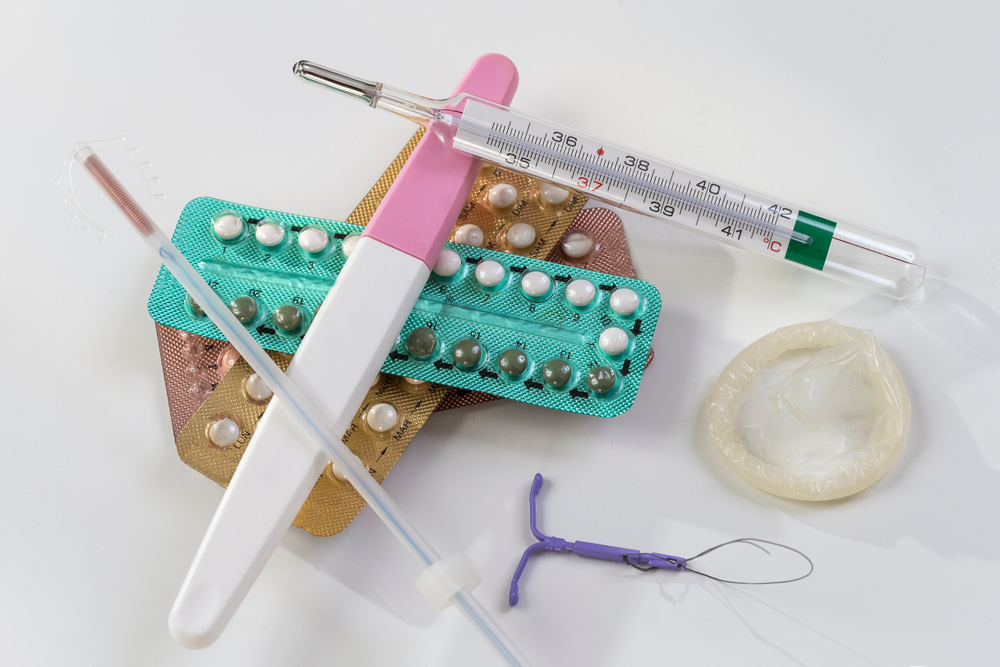
As provider F.G. considers the best options for her patients, she may begin by looking to the two broadest categories for contraception methods: hormonal and nonhormonal. Hormonal contraception uses either estrogen and/or progesterone to prevent pregnancy. Common examples include oral contraceptive pills, progesterone intrauterine devices or implants. Hormonal contraception prevents pregnancy through a three-pronged approach. First, hormonal contraception suppresses ovulation by inhibiting the release of Follicle Stimulating Hormone and Luteinizing Hormone.1 Next, it disrupts the proliferative and secretory phases of the endometrium, which thins the endometriallining and inhibits implantation.1 Lastly, hormonal contraception increases the viscosity of the cervical mucus affecting sperm mobility.1 The combination of these effects makes hormonal contraception highly effective, and therefore a popular patient choice in preventing unintended pregnancies.

By contrast, nonhormonal contraception does not alter a woman’s hormonal system. Rather, nonhormonal contraception functions by blocking or impairing sperm from reaching the egg, whether through physical or chemical means.2 Common examples include condoms, diaphragms or spermicide. While nonhormonal contraception methods do not boast the same efficacy as hormonal contraception methods, they may present fewer challenges for patients that otherwise struggle with ease of availability, hormone balance, or significant medical histories.

Contraception Methods: What’s New?

Over the counter progesterone only oral contraceptive pill (POP)

 In March 2024, the U.S. Food and Drug Administration (“FDA”) approved its first over the counter (“OTC”) oralcontraceptive pill.3 It is a progestin (norgestrel) only, 28-day pill regimen that contains progestin.3

Practice Implications:

Nonhormonal Contraceptive Gel

Patient controlled nonhormonal contraceptive vaginal gel contains lactic acid, citric acid, and potassium bitartrate. One prefilled applicator placed into the vagina before vaginal sex helps to maintain an acidic vaginal pH and reduces sperm motility.5

Practice Implications:

Self-Administered Injectables

Depot medroxyprogesterone acetate (DMPA) is an injectable contraceptive method approved in in the United Statessince 2004. DMPA, can be administered subcutaneously or intramuscularly every 13 weeks.7 The differences between the two methods are listed in Table 1. DMPA has not been fully adopted for self-administration by the FDA, but was supported by the Center for Disease Control and Prevention and the World Health Organization in 2024.7  Self-administration offers patient control, shared decision making with increased access. Research studies support its feasibility and safety.7

Practice Implications:

Contraception Methods in Development

 Biodegradable Implant

Contraceptive Implants are a long acting, reversible form of contraception. They release etonogestrel for up to a three-year period. The traditional implant requires appointments for both insertion and removal. In development is the biodegradable long term contraceptive implant.10 The biodegradable implant is the same as the traditional implant as it releases a slow amount of progestin. However, with the biodegradable properties, the implant would not require removal, therefore, decreasing the amount of office appointments and procedures required.10 Clinical trials are presently in phase II.10 Their present findings suggest that the implant is a safe and effective long-acting contraceptive.10 These findings need further confirmation in Phase III clinical trials with larger sample sizes.10

Practice Implications:

Practitioners should be aware that biodegradable implants are presently in research and development. This method will offer long term contraception for patients interested who have difficulty keeping office appointments or have anxiety with the removal procedure.

New Generation IUDs

The Copper Intrauterine Device is a nonhormonal contraceptive method approved by the FDA in 1984 and available since 1988 in the United States.11 It is a small, T shaped device that is placed in the uterus during an office procedure. It releases a small amount of copper which is spermicidal and is 99% effective in the prevention of pregnancy.11 In 2024, research is investigating lower copper amounts and changing the IUD to a more flexible and spherical or frameless shape.11 The new designs and dosages intend to ease insertion, reduce perforation, malposition and expulsion rates and decrease dysmenorrhea and menorrhagia.11

Practice Implications:

Conclusion:

Potential solutions for provider F.G. evaluating the three patients listed above using the latest advances in contraceptive options could include:

Advances in contraception allow women to tailor contraceptive options to their lifestyle. As women’s health practitioners, we are challenged to keep up to date with present and future methods giving women safe, effective and convenient options.


Monica Ketchie DNP, CNM, ANP, FACNM, is Associate Professor of Nurse Midwifery and Women’s Health Nurse Practitioner Coordinator at the School of Nursing, Georgia College & State University.

References

  1. Britton, E., Alspaugh, A., Greene, M. Z., & McLemore, M. R. (2020). CE: An evidence- based update on contraception. AJN, American Journal of Nursing, 120(2), 22-33. doi: https://doi.org/10.1097/01.naj.0000654304.29632.a7
  1. Howard SA, Benhabbour SR. Non-Hormonal Contraception. Journal of Clinical Medicine. 2023;12(14):4791. doi: https://doi.org/10.3390/jcm12144791
  2. S. Food and Drug Administration. FDA approves first nonprescription daily oral contraceptive. FDA; 2023. Accessed October 4, 2024. Available at: https://www.fda.gov/news-events/press-announcements/fda-approves-first-nonprescription-daily-oral-contraceptivenonprescription-daily-oral-contraceptive
  1. How much does Opill cost? (n.d.). Drugs.com. https://www.drugs.com/medical-answers/how-opill-cost-3576594
  2. Baker, C. C., & Chen, M. J. (2022). New contraception update — Annovera, Phexxi, Slynd, and Twirla. Current Obstetrics and Gynecology Reports, 11(1), 21- 27. https://doi.org/10.1007/s13669-021-00321-4
  3. Phexxi Prices, Coupons, Copay & Patient Assistance. (n.d.). Drugs.com. https://www.drugs.com/price-guide/phexxi
  4. Curtis KM, Nguyen AT, Tepper NK, et al. (2024) U.S. Selected Practice Recommendations for Contraceptive Use. MMWR Recommendations and Reports;73(No. RR-3):1–77. DOI: http://dx.doi.org/10.15585/mmwr.rr7303a1
  5. A Toolkit for Self-Administration of Subcutaneous Depot Medroxyprogesterone Acetate A TOOLKIT FOR SELF-ADMINISTRATION OF SUBCUTANEOUS DEPOT MEDROXYPROGESTERONE ACETATE. (n.d.). Retrieved October 4, 2024, from https://ctcsrh.org/wp-content/uploads/User_Administration_DMPA-SC_Toolkit-002.pdf
  6. Depo-subQ provera 104 Prices, Coupons, Copay Cards & Patient Assistance. (n.d.). Drugs.com. https://www.drugs.com/price-guide/depo-subq-provera-104
  7. Yan, M., Zhang, Y., Wu, Z., Li, Y., Dou, K., Wang, B., Wang, Y., & Zhou, Q. (2022). Recent progress in advanced biomaterials for long-acting reversible contraception. Journal of Nanobiotechnology, 20(1). https://doi.org/10.1186/s12951-022-01329-5
  8. Bunting, J. J., Leung, Z. C., Boboc, B., Betts, D. H., Gilroy, J. B., Oinonen, K., Choi, K., Chambers, L., Rafea, B.A., & Gateman, S. M. (2024). Revolutionizing women’s health: The quest for materials for next-generation, non-hormonal intrauterine devices. npj Women’s Health, 2(1). https://doi.org/10.1038/s44294-024-00026-y